Getting your brakes repaired is a reassuring experience. Knowing that a professional has inspected and serviced one of your car’s most critical safety systems brings genuine peace of mind. However, a common question arises after the work is completed: where can you safely test your brakes to ensure everything is functioning perfectly?
You do not need to break the speed limit or find a deserted country lane. In fact, the best places to test your brakes are often ordinary roads and car parks that offer controlled, low-risk environments. This guide, brought to you by Mr Perfect Car Repair, will walk you through the safest and most effective ways to test your brakes in and around Cambridge.
Understanding Your Brake Repair
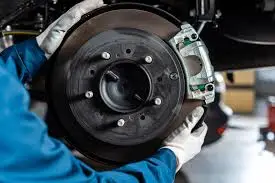
Before you start testing, it helps to understand what work has been carried out. Brake repairs can range from simple pad replacements to more comprehensive overhauls involving discs, calipers, or brake fluid. Each type of repair may feel slightly different during the first few applications.
New brake pads, for instance, require a short period of bedding in. During this time, they may feel slightly less sharp until they have fully mated with the surface of the discs. This is completely normal and should not be a cause for concern. What you are looking for during your test is consistency, linear stopping power, and the absence of any unusual noises or vibrations.
The Principles of a Safe Brake Test
Safety is always the priority when testing any vehicle system, but especially brakes. You should never perform aggressive brake tests in areas with other road users, pedestrians, or children. The goal is to verify functionality, not to simulate an emergency stop unless you are in a completely controlled environment.
Here are the golden rules for a safe brake test:
- Choose a quiet time of day, such as mid-morning or early afternoon on a weekday
- Avoid testing in wet or icy conditions unless you are experienced with how your vehicle behaves in such weather
- Ensure all passengers are securely wearing seatbelts
- Gradually increase braking intensity rather than stamping on the pedal immediately
- Always check your mirrors before any brake application, even during a test
With these principles in mind, let us explore the specific locations around Cambridge that are ideal for this purpose.
Quiet Residential Streets
The first and most accessible option is your own neighbourhood. Cambridge has many quiet residential streets, particularly in areas away from the city centre such as Queen Edith’s, Cherry Hinton, or parts of Arbury. These roads typically have low traffic volumes, especially outside of rush hours.
When using residential streets, you are not looking to perform high-speed stops. Instead, use these roads to check the basic functionality of your brakes at low speeds. Apply the brakes gently as you approach junctions or parked cars. Feel for any sponginess in the pedal or any pulling to one side.
A gentle brake test at 20 miles per hour is more than sufficient to confirm that the hydraulic system is pressurising correctly and that the pads are making proper contact with the discs. You should also test the handbrake or electronic parking brake on a mild incline if one is available nearby.
Retail and Business Parks After Hours
Cambridge has several retail and business parks that become very quiet once the shops have closed. The Cambridge Retail Park on Newmarket Road and the Beehive Centre are good examples. During evening hours or early on Sunday mornings, their extensive car parks are often nearly empty.
These locations offer large, open tarmac areas with good visibility. They provide an opportunity to perform slightly more comprehensive tests than residential streets allow. You can safely drive in a straight line and apply the brakes with more force, all while having no risk of hitting another vehicle or pedestrian.
When using a retail car park, be mindful of kerbs, lighting columns, and trolley bays. Also, remember that these are private lands. While most security staff are understanding of a driver performing a single safety check, they may ask you to leave if you appear to be driving recklessly or performing repetitive manoeuvres.
Industrial Estates on Weekends
Industrial estates are often overlooked gems for this purpose. Areas such as the Cambridge Science Park, St John’s Innovation Park, or the industrial units near Cherry Hinton Road have wide roads and very little traffic on Saturdays and Sundays.
The layout of these estates usually includes long straights, gentle curves, and clear sightlines. This variety allows you to test your brakes under different conditions. You can brake in a straight line, test braking while turning gently, and practise controlled stops from slightly higher speeds than residential roads permit.
Because these areas are designed for commercial vehicles, the road surfaces tend to be well-maintained. This is helpful because it removes variables such as potholes or uneven surfaces that could give you false feedback about your brakes.
The Shelford Bypass and Similar A-Roads
For a test that includes higher speeds, you need a road where the national speed limit applies but traffic remains light. The Shelford Bypass, part of the A1301, offers a short stretch of dual carriageway that is usually quiet outside of peak commuting hours. Similarly, sections of the A10 heading towards Royston or the A428 towards St Neots can be used with caution.
These roads allow you to safely accelerate to 50 or 60 miles per hour and then decelerate smoothly down to 30 miles per hour using your brakes. You are not attempting to stop from high speed, but rather confirming that the brakes feel progressive and powerful at the kinds of speeds you use on a daily basis.
Always use your mirrors before braking on any A-road and be aware of traffic approaching from behind. If a vehicle is following closely, postpone your test until the road is clear behind you. Courtesy and safety must always come first.
What to Look For During Your Test
As you drive through these locations, your senses will tell you everything you need to know about your newly repaired brakes. Pay close attention to the following sensations.
The brake pedal should feel firm under your foot. If it sinks slowly towards the floor, that suggests a problem with the hydraulic system, possibly a leak or air trapped in the lines. This is something that requires immediate attention from a professional like Mr Perfect Car Repair.
Your vehicle should stop in a straight line without any steering correction. If the car pulls to one side, it may indicate a stuck caliper or uneven brake pressure between the left and right wheels. While sometimes this can be caused by new components bedding in, it is worth mentioning to your mechanic if it persists beyond a few stops.
Listen for noise. New brakes should be quiet. Any grinding, squealing, or clicking sounds after a repair should be investigated. A slight squeak during the first few stops is not unusual, but persistent noise is not.
Feel for vibration. If the brake pedal pulses under your foot or the steering wheel shakes when you brake, this could indicate warped discs or an issue with the fitment of the new components.
Using a Roller Brake Tester
The most scientific way to test brakes does not involve driving at all. A roller brake tester is a piece of equipment found at many MOT centres and garages. It measures the braking force generated by each wheel individually and compares them for balance.
While Mr Perfect Car Repair will have already tested your brakes thoroughly before returning your vehicle, you can request a roller brake test if you want independent confirmation. This test is quick, completely safe, and provides a printed readout of your brake performance. It measures not only the total stopping force but also the balance between the left and right sides and the efficiency of the parking brake.
This method is particularly useful if you have had major brake work such as disc and pad replacements on all four corners or if your vehicle has an ABS or stability control system that makes road testing more complex.
What If Something Feels Wrong?
If during your test you notice anything that concerns you, the safest course of action is to stop testing immediately and drive gently back to your home or directly to a garage. Spongy pedals, complete loss of braking power, or violent pulling to one side are serious issues that should not be ignored.
Do not assume that a problem will fix itself or that you simply need to brake harder. Modern braking systems are designed to be consistent from the first application. If something feels wrong, it probably is wrong, and driving further will only increase the risk.
Mr Perfect Car Repair stands behind all work carried out. If you experience any issues after a brake repair, you should contact the garage immediately. Reputable repair shops will want to inspect the vehicle and resolve any problems as quickly as possible.
A Note on ABS and Electronic Systems
Modern vehicles are equipped with Anti-lock Braking Systems (ABS), Electronic Brakeforce Distribution (EBD), and sometimes even autonomous emergency braking. Testing these systems is not something you should attempt on public roads.
These safety features are designed to activate only under extreme conditions that involve wheel lockup or imminent collision. Deliberately trying to trigger your ABS on a public road is dangerous and unnecessary. If your brake repair involved any component related to these electronic systems, your mechanic will have tested them using diagnostic equipment.
The best way to confirm that your ABS is functioning correctly is to look for the warning light on your dashboard. If the light turns off when you start the engine and stays off, the system has passed its self-check and is ready to operate if needed.
Preparing for Your MOT Test
A brake test is also an excellent opportunity to prepare for your upcoming MOT. The MOT inspection manual for cars and passenger vehicles includes detailed checks of brake condition, operation, and performance . By testing your brakes proactively, you can identify potential issues before they become MOT failures.
The manual specifies that service brakes, secondary brakes, and parking brakes must all function correctly. The inspection also covers the Anti-lock Braking System where fitted . A quick road test in one of the locations suggested above will give you confidence that your vehicle will pass this section of the MOT.
If you have any doubts about your vehicle’s readiness, Mr Perfect Car Repair offers pre-MOT inspections that can identify and address issues before the official test.
Final Thoughts from Mr Perfect Car Repair
Testing your brakes after a repair does not need to be a stressful or dangerous activity. Cambridge offers plenty of safe, quiet locations where you can verify that your vehicle is stopping correctly and predictably. From residential streets to retail car parks and quiet industrial estates, you have options that allow thorough testing without risking yourself or others.
Remember that new brakes may feel slightly different from your old ones. A firmer pedal, a different pedal travel distance, or a changed feel underfoot are all normal as components bed in. However, any grinding noises, vibrations, or pulling to one side should be investigated promptly.
At Mr Perfect Car Repair, we take pride in delivering brake repairs that restore your vehicle to manufacturer standards or better. Our team uses quality components and follows precise procedures to ensure safety and reliability. If you ever have concerns about your brakes after leaving our workshop, we are only a phone call away.
Safe driving starts with safe stopping. Take a few minutes to test your brakes properly, and you will enjoy complete confidence every time you press the pedal.