By Mr Perfect Car Repair
Few debates divide Cambridge car owners quite like this one. On one side, you have the convenience of an automatic car wash—quick, effortless, and seemingly effective. On the other, the traditional hand wash, which requires time, effort, and a bit of know-how. But beneath this simple choice lies a more important question: what is each method actually doing to your car’s paintwork?
At Mr Perfect Car Repair, we have inspected hundreds of vehicles across Cambridge. The condition of a car’s paint rarely lies. It tells a story about how that vehicle has been washed, cared for, and sometimes neglected. Let us move past the opinions and look at the facts. This article examines both methods in detail, helping you make an informed decision for your vehicle—whether you drive a family hatchback through the city centre or a cherished classic on country roads.
The Two Faces of Automatic Washing
Before we can compare, we need to understand what an automatic car wash really is. Most drivers assume that if a machine does the work, it must be consistent and safe. Unfortunately, this assumption misses a crucial distinction.
Touchless Car Washes
These systems rely on high-pressure water jets and strong detergents to clean your vehicle without any physical contact. The obvious advantage is that nothing touches your paint—no brushes, no cloths, no risk of dragging dirt across the surface.
However, this cleaning method comes with its own compromises. Because there is no mechanical agitation, touchless washes must use more aggressive chemicals to break down road grime. These high-pH detergents can strip away protective waxes and sealants over time. Furthermore, they often struggle with stubborn contaminants like dried bugs, tree sap, and road tar.
Friction (Brush-Based) Car Washes
This is the traditional automatic wash many Cambridge drivers recognise—rotating brushes or soft cloth strips that physically scrub the vehicle. These systems are undeniably effective at removing dirt, but the mechanism is precisely where the problem lies.
The brushes collect dirt, grit, and debris from every vehicle that passes through. When these contaminated brushes spin against your paint, they effectively act like sandpaper. What looks like a thorough clean is actually a process of grinding abrasive particles across your clear coat.
From years of experience at Mr Perfect Car Repair, vehicles that regularly visit friction car washes arrive with noticeably thinner, more damaged clear coats than those washed properly.
The Damage You Can See
Let us be specific about what happens to your car when the wrong washing method is used repeatedly.
Swirl Marks
These are the fine, spider-web-like patterns visible when sunlight hits your paint at certain angles. They are most noticeable on darker-coloured vehicles. Swirl marks are essentially thousands of microscopic scratches in the clear coat, and friction car washes are a primary cause.
Micro-Scratches
Unlike swirl marks, these scratches may not form a pattern, but they accumulate over time. Each wash adds more, gradually diminishing the depth and clarity of your paint.
Clear Coat Degradation
Your clear coat is not infinite. It is a protective layer, typically between 1.5 and 2.5 mils thick. Aggressive detergents and abrasive brushes both contribute to wearing this layer down. Once compromised, your underlying paint becomes vulnerable to oxidation and environmental damage.
Beyond the Paint
Automatic washes also pose risks to other parts of your vehicle. The guide rails that pull your car through can damage alloy wheels. Brushes can catch and dislodge trim pieces, wipers, and antennas. These are not hypothetical risks—they happen regularly.
Mr Perfect Car Repair has corrected paint on countless Cambridge cars that arrived with precisely this type of automatic wash damage. The pattern is unmistakable.
The Hand Wash Truth
Now, before you conclude that hand washing is the obvious answer, we need to address an uncomfortable reality. Hand washing can also destroy your paint if done incorrectly.
The Sponge Problem
Over sixty percent of drivers who wash their own cars still reach for a standard sponge. This is a mistake. A sponge has no pile to trap dirt particles. Instead, it drags grit across the paint surface, much like an automatic car wash brush.
The Two-Bucket Method
Professional detailers and knowledgeable enthusiasts use what is known as the two-bucket method. One bucket contains your soapy water. The second contains clean rinse water. After each pass on the vehicle, you rinse your wash mitt in the clean water bucket before dipping back into the soap. This simple practice prevents dirt from being reintroduced to your paint.
The Right Tools
A proper hand wash requires:
- A microfibre or sheepskin wash mitt (not a sponge)
- Two buckets, ideally with grit guards
- A pH-balanced car shampoo
- Microfibre drying towels
- A shaded area to prevent water spots
Without these essentials, your careful hand wash may be causing more harm than good.
Mr Perfect Car Repair always recommends investing in proper tools. The cost is minimal compared to a professional paint correction.
What About Those Roadside Hand Car Washes?
Cambridge has no shortage of hand car wash operations. They are convenient and inexpensive, but quality varies enormously.
Many of these operations use high-pressure traffic film removers that are mixed too strongly, potentially marking alloy trims and stripping lustre from rubber seals. They may reuse dirty cloths and mitts across multiple vehicles. Tyre shine products, while visually appealing, often fling off onto freshly cleaned paint as soon as you drive away.
If you choose to use a roadside hand wash, visit early in the day when wash media and water are cleanest. Look for proper pre-wash snow foam being used, not just a pressure washer blast.
That said, Mr Perfect Car Repair often sees vehicles from these operations with hidden damage—scratches that only become visible under proper lighting.
The Verdict: Which Method Is Actually Destroying Your Paint?
Let us be direct.
Friction automatic car washes are the most damaging option available to Cambridge drivers. The combination of contaminated brushes, aggressive mechanical action, and unpredictable maintenance standards makes them a genuine threat to your paintwork.
Touchless automatic washes are safer in terms of physical contact, but their harsh chemicals will strip protective layers over time. They are acceptable for occasional use but not ideal for regular maintenance.
Poorly executed hand washing—whether at home or at a roadside operation—can be nearly as damaging as an automatic wash. A sponge, a single bucket, and a dirty cloth are recipes for swirl marks.
Proper hand washing, performed with the correct technique and tools, remains the safest method for preserving your paint. Nothing else allows you to control every variable that contacts your vehicle’s surface.
At Mr Perfect Car Repair, we do not simply offer an opinion. We provide this guidance based on real vehicles, real paint measurements, and real corrections performed in Cambridge.
The Cambridge Context
Our local conditions add another layer to this decision. Cambridge roads see a mix of city dust, pollen from The Backs, agricultural debris from surrounding countryside, and road salt during winter months. Each of these contaminants bonds differently to your paint.
A vehicle that is properly maintained with regular hand washing will have a layer of protection—wax or sealant—that makes future cleaning easier and safer. Conversely, a vehicle that has been repeatedly subjected to automatic washing will have compromised clear coat and no protective layer remaining.
The vehicles that arrive at Mr Perfect Car Repair with the most severe paint damage are almost always those that relied exclusively on automatic washes. The evidence is visible under any inspection light.
A Better Path Forward
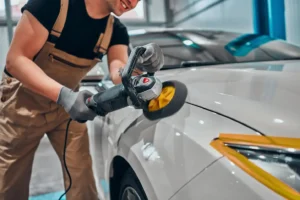
If your paint is already showing signs of swirl marks, micro-scratches, or dullness, do not despair. This damage can be addressed. Professional paint correction removes a microscopic layer of damaged clear coat, restoring clarity and depth. Once corrected, proper washing habits will maintain those results for years to come.
Mr Perfect Car Repair specialises in this exact restoration work across Cambridge. The transformation after a proper correction is significant—vehicles leave looking better than they have in years.
The choice is not simply between convenience and care. It is about understanding what your paint needs to survive daily driving in Cambridge conditions. An automatic wash saves you thirty minutes today. A proper hand wash saves you from expensive paint correction tomorrow.
Final Thoughts
Ask yourself what your car’s paint looks like in direct sunlight. Do you see those fine spider-web patterns? Does the reflection lack depth? If so, your current washing method is likely the culprit.
You do not need to become a professional detailer to protect your vehicle. You simply need to move away from the most damaging options—friction automatic washes and careless hand washing—and toward methods that respect the engineering of your paint.
Your car’s finish is not just about appearance. It protects the metal beneath from corrosion. It preserves resale value. And on a sunny Cambridge morning, it makes your vehicle look truly cared for.
That is worth washing properly.
Mr Perfect Car Repair provides professional paint correction and detailing services in Cambridge. For vehicles that need restoration from washing damage, or for guidance on proper maintenance, reach out to discuss your needs. Your paint will thank you.